
Whoa, that surprised me.
I was digging into Solana transactions the other day. Their speed is mind-bending compared to older chains, honestly. Initially I thought the only thing that mattered was TPS, but then I realized that confirmations, fee anatomy, and tool UX often matter more for real users and devs. My instinct said there had to be a better way to inspect what’s actually happening.
Really, that tripped me up. Solana’s transaction model is lean and cheap compared to many alternatives. Block explorers are where users translate raw data into meaning. On the surface a hash and slot look trivial, but when you’re debugging a failed transfer, tracking SPL token metadata, or reconciling wallets across programs, those fields become critical and annoyingly nonobvious. Hmm… somethin’ felt off with how some explorers showed inner instructions.
Seriously, I was baffled. I tried a few explorers and poked at raw logs. The difference wasn’t just UI polish; it was about how parsable the data was. Actually, wait—let me rephrase that: some tools hide inner instructions or collapse token balances in ways that make forensic work take twice as long, and that kills developer productivity. I’m biased, but the best explorers make tracing an entire transaction path intuitive.
Here’s the thing. Check this out—when you open a transaction on a good explorer you can see pre- and post-balances, inner instructions, and which program invoked which accounts (oh, and by the way, that UX is a pet peeve of mine). That saves hours when you audit token flows on-chain. On one hand explorers are indexers with search, though actually they also serve as translators between cryptographic state and human mental models, which is harder than it sounds. I use an explorer both as a dev and as a cautious user (oh, and by the way, that UX is a pet peeve of mine).
Wow, that hits home. If you want raw power, look at how they index accounts and program logs, which is very very important for audits. Speed matters, but so does query flexibility for complex investigations. Something bugs me about explorers that present only token balances without linking back to the instructions that changed them, because you lose causality and then you spend hours guessing. On-chain recon is messy enough without extra friction from the tooling.
Why one explorer kept coming up in my testing
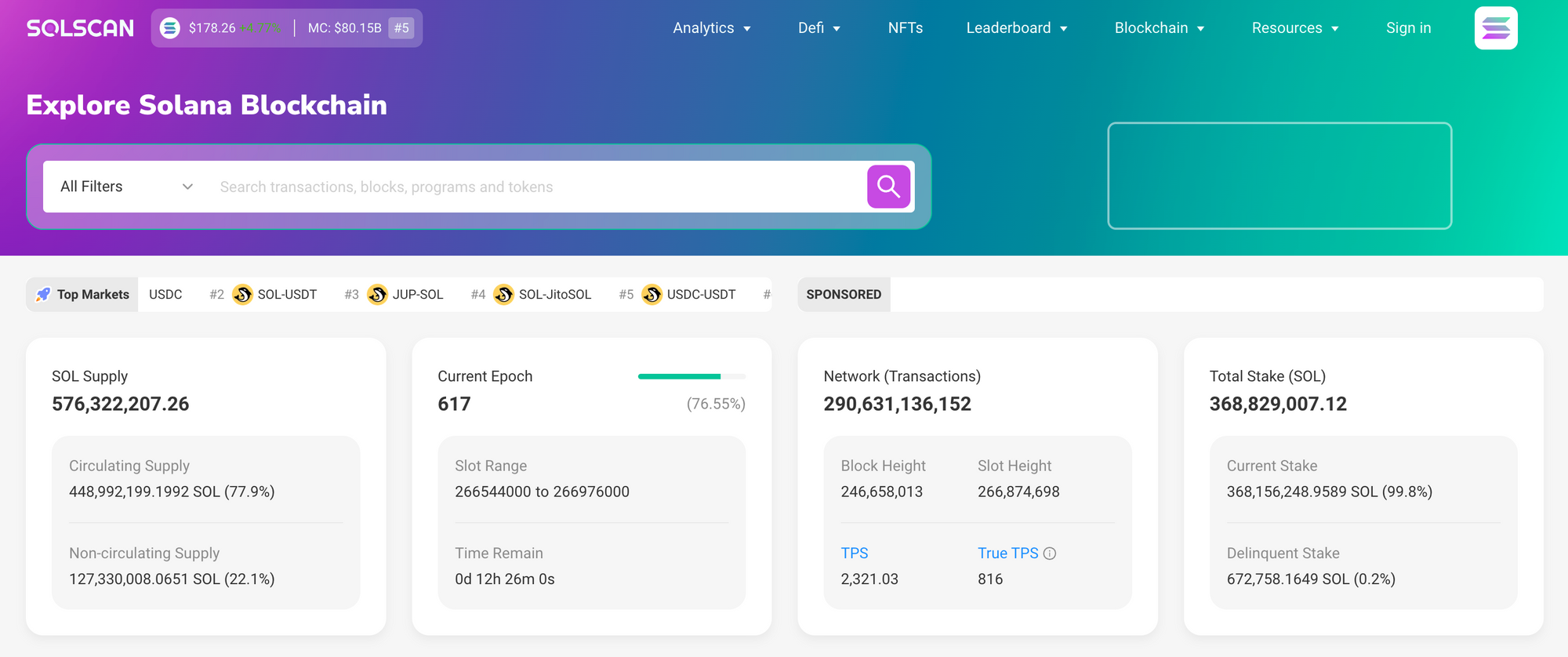
One tool that kept surfacing in my tests was solscan, and not just because it looks polished. It parsed inner instructions cleanly and showed a clear account-change timeline. Initially I thought I could rely on cluster explorers, but then I compared how queries were answered under load and how logs were surfaced, and the difference in developer ergonomics was stark. I’m not 100% sure about every edge case, but the tooling landscape is finally catching up and that matters for builders in San Francisco, New York, and everywhere in between.
Okay, so check this out—here’s a quick checklist I use when vetting an explorer. First, can I see inner instructions? Second, are pre- and post-balances obvious? Third, is token metadata linked so I don’t have to cross-check multiple tools? Fourth, can I search by program ID and follow CPI chains? If the answer is yes, you save time. If not, you get frustrated, and frustration slows teams down.
My gut told me to focus on developer ergonomics rather than raw feature lists. Something felt off when an explorer showed balances but hid the instruction that changed them—it’s like seeing a bank statement without a timestamp. On one hand validators and indexers are doing heavy lifting, though actually the UX layer has to stitch those pieces into a coherent story for humans. I’m not perfect here; I missed a few quirks in earlier versions of my workflow, and I still run into odd edge cases.
FAQ
How can I trace a failed SOL transfer?
Start by viewing the transaction hash, then inspect inner instructions and pre/post balances to spot which account lost lamports. Look for program invocations and parsed logs that indicate a program error. If logs are collapsed, expand them or use an explorer that surfaces raw program logs so you can see the error stack.
Are all explorers equally trustworthy?
No. Some index faster or index more deeply, and some prioritize readability over raw completeness. Use multiple sources when doing audits, but favor tools that link program calls to balance deltas and token metadata—those connections are gold when you’re troubleshooting.
Comentários