
What if the most dangerous part of a DeFi transaction happens before the swap itself? Many users focus on the quoted exchange rate, bridge route, or gas fee, yet the lasting permission granted to a smart contract may matter more than the transaction they came to sign. A token approval can allow a contract to move assets later, under conditions the user may not notice at the time.
This is why token approval management belongs at the center of DeFi security, especially when cross-chain swaps are involved. The core issue is not that approvals are inherently unsafe. They are a practical design feature of Ethereum-compatible applications. The issue is that users often treat a temporary trading action as if it created only a temporary permission. It may not.
The first misconception: an approval is not a transfer
Most ERC-20 tokens use a two-step spending model. First, a wallet owner calls the token contract’s approve function and sets an allowance for another contract, commonly a decentralized exchange router, lending protocol, or bridge component. Later, that approved contract can call transferFrom to move tokens within the permitted amount.
That distinction is easy to miss in a wallet interface. The approval transaction may not move any tokens immediately, but it changes what another contract is authorized to do. A user who approves 1,000 tokens and swaps only 100 may still have an allowance for the remaining amount. If the approved contract is compromised, malicious, incorrectly configured, or simply no longer trusted, the unused authority can become an exposure.
The practical mental model is closer to granting a recurring payment authorization than handing over cash once. The approval is a capability: a rule recorded on-chain that says which spender may move which token from which owner, up to what limit. Revoking the permission later requires another transaction, and revocation does not undo transfers that already occurred.
Why cross-chain swaps make the permission model harder
A cross-chain swap is not one universal action. It is usually a sequence involving a source-chain token, a router or aggregator, a bridge or messaging system, and a destination-chain settlement process. Different architectures use different combinations of escrow contracts, liquidity pools, wrapped assets, canonical bridges, and relayers.
That fragmentation creates a common misconception: users may think they are approving “the swap,” when they are actually approving a specific contract on a specific network to spend a specific token. An approval on Ethereum does not automatically authorize a contract on Arbitrum, Base, Polygon, or another chain. At the same time, moving to a new chain may require a new approval, creating more permissions to track.
The risk is therefore cumulative rather than purely transactional. Each chain has its own contracts, token addresses, wallet state, and approval history. A clean approval record on one network says little about permissions left on another. Cross-chain convenience can increase the number of trust relationships even when the user experiences the flow as one polished interface.
There is also a second layer of uncertainty. A bridge may be technically separate from the swap router, while an aggregator may choose among multiple routes. The visible quote does not always reveal every contract that will participate. This does not prove that a route is unsafe, but it means that “I recognized the app” is weaker protection than understanding the contracts and permissions involved.
Myth-busting the security shortcuts
Myth: Unlimited approvals are always harmless because contracts cannot spend without a new signature
Once an allowance exists, the approved spender may be able to use it without asking the wallet owner to sign another approval. The owner still controls the wallet’s signing key, but the contract already possesses a defined spending authority. Unlimited allowances reduce friction for future transactions; they also enlarge the potential loss if the spender is later exploited or behaves maliciously.
Myth: Revoking an approval protects funds that were already exposed
Revocation stops future use of the allowance from that point onward. It cannot reverse a transfer that has already been executed. Timing matters, and blockchain transactions are generally irreversible. If a user suspects a dangerous approval, the priority is to stop further spending authority promptly, while also assessing whether assets have already moved.
Myth: A familiar front end guarantees a safe contract
A website is an interface, not the entire protocol. A compromised domain, injected script, incorrect chain selection, or altered routing call can present a familiar experience while requesting an unexpected permission. Wallet transaction simulation and clear contract-context warnings can reduce this gap, but they are aids rather than guarantees.
Myth: Cross-chain risk is just bridge risk
Bridge security is important, but it is only one part of the threat model. Users must also consider token approvals, destination-chain contracts, wrapped assets, relayers, liquidity providers, oracle assumptions, and the possibility that a transaction fails on one side after an action succeeds on the other. A cross-chain system can be secure in one component and still expose users through another.
A better framework for managing approvals
Before approving a token, ask four questions: What token am I authorizing? Which exact contract is receiving permission? How much may it spend? How long do I want that permission to remain useful? These questions sound basic, but they separate the economic purpose of a transaction from the technical authority it creates.
For a one-time or unfamiliar interaction, a limited allowance is generally easier to reason about than an unlimited one. It may require another approval later and can cost additional gas, which is a real trade-off for US users managing activity across several networks. Yet the extra friction functions as a control: a future increase in spending authority becomes visible instead of remaining silently available.
Approval management should also be treated as an inventory problem. Review permissions chain by chain, not just app by app. A user might remember interacting with a decentralized exchange but forget an older approval on a layer-2 network or a token permission granted to a route that is no longer used. The relevant question is not only “Do I trust this application?” but “Which contracts can move my assets today?”
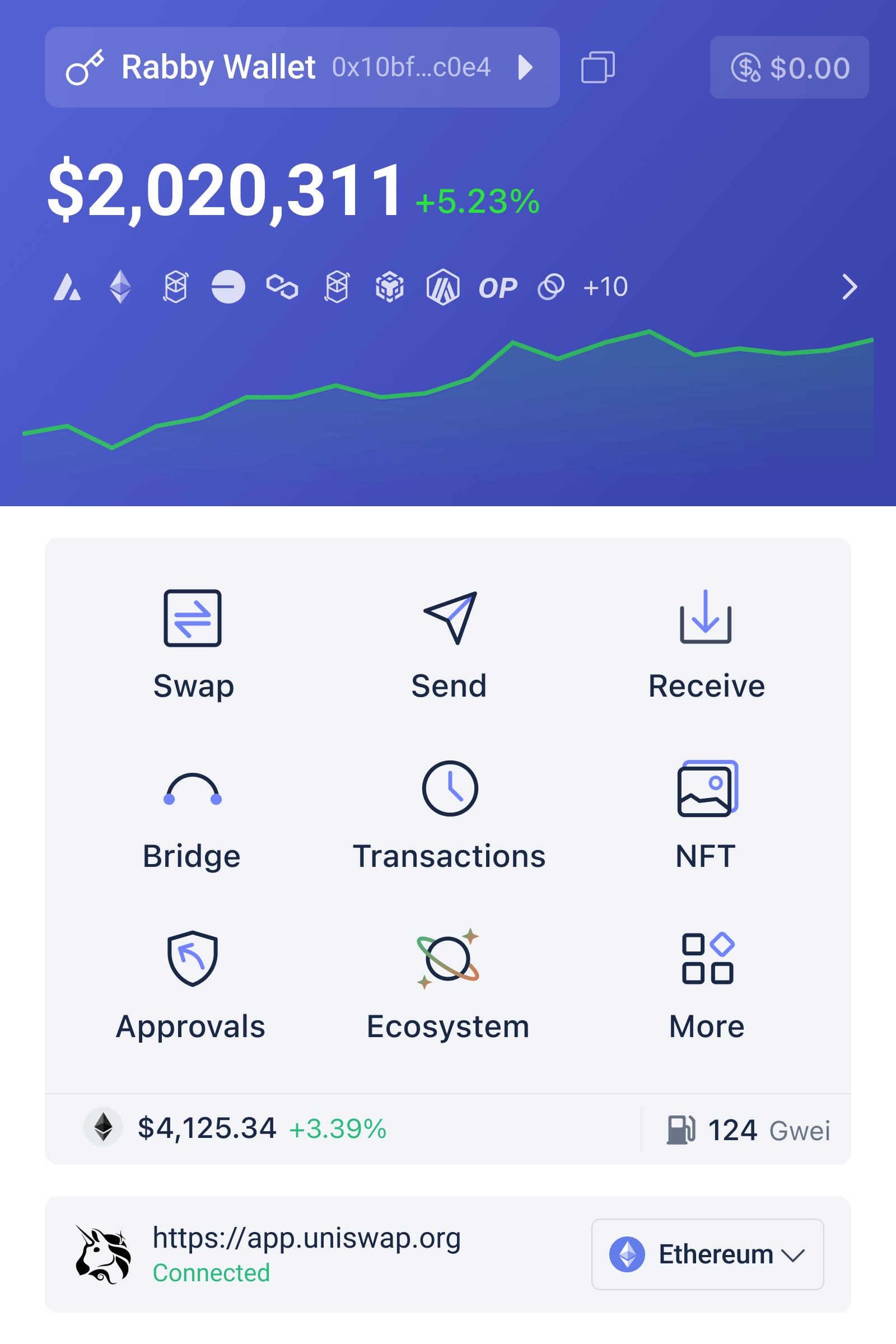
A wallet extension with transaction simulation, address labeling, approval visibility, and chain-aware warnings can make this inventory more legible. Users considering a rabby extension download should still verify the source and installation steps carefully, then treat the wallet’s warnings as decision support rather than an automatic safety guarantee. No interface can eliminate the need to inspect an unusual request or protect a user who knowingly confirms a malicious one.
The deeper limitation: security tools operate under incomplete information
Transaction simulation can show an expected outcome, but an expected outcome is not the same as a proof of future safety. Smart contracts may depend on external calls, market conditions, upgrade mechanisms, governance decisions, or code paths that are difficult to model perfectly. Simulations can also become stale if the transaction is delayed or the relevant state changes before execution.
Approval warnings have a similar boundary. A known contract is not necessarily a safe contract, and an unknown contract is not necessarily malicious. Reputation signals are probabilistic. They can help users prioritize attention, but they should not replace the more fundamental checks: chain, token, spender, amount, recipient, and economic result.
There is an unavoidable trade-off between usability and control. Requiring a separate limited approval for every operation can improve least-privilege security but make DeFi cumbersome, particularly for active traders and liquidity providers. Unlimited approvals make recurring use smoother but shift more responsibility toward contract security and monitoring. The right choice depends on transaction size, protocol maturity, contract upgradeability, and how often the user expects to return.
What to watch as DeFi becomes more cross-chain
If cross-chain applications continue to consolidate multiple actions into one interface, permission transparency will become more important, not less. A single “swap” button may conceal several independent authorizations and settlement assumptions. Tools that present the full route, distinguish approvals from transfers, and explain destination-chain consequences could reduce the gap between what users intend and what they sign.
A likely direction is more granular authorization: permits, session keys, scoped spending limits, and account-abstraction designs can potentially reduce repeated signatures or limit what a service may do. But these mechanisms introduce their own complexity. A temporary key, for example, still needs carefully defined scope and expiry; a sophisticated authorization system can be difficult for an ordinary user to audit.
The durable lesson is not to avoid every approval or cross-chain swap. It is to match permission size with transaction purpose. Use greater caution when the amount is large, the route is unfamiliar, the contract is upgradeable, or several chains are involved. Security improves when the user can explain, in plain language, what authority is being granted and what would happen if the approved contract were compromised tomorrow.
Frequently Asked Questions
What is a token approval in DeFi?
A token approval is an on-chain permission allowing a specified contract to spend a specified token from your wallet, usually up to a stated allowance. It is separate from the later transfer itself and may remain active after the original swap is complete.
Should I always revoke token approvals after a swap?
Not necessarily. Revoking unused approvals can reduce exposure, but it costs a transaction fee and may create friction if you use the same protocol frequently. Consider revoking permissions for unfamiliar, high-value, obsolete, or no-longer-trusted contracts, while recognizing that revocation only prevents future use.
Does an approval on one blockchain affect my wallet on another?
Usually, approvals are recorded separately on each network. An approval on one chain does not normally grant spending authority on another, but cross-chain activity can create multiple approvals that need to be reviewed independently.
What is the safest way to approach a cross-chain swap?
Confirm the source and destination chains, token contracts, spender addresses, allowance amount, route, fees, and expected recipient. Start with a modest amount when the route is unfamiliar, inspect wallet warnings carefully, and avoid treating a familiar interface as proof that every contract in the route is safe.
Comentários